







When replacing a damaged or worn engine, buyers often compare two common options: a long block and a complete engine. At first glance, both products may seem similar because they are used for engine repair or replacement. However, they are very different in terms of included components, installation work, total cost, and suitable applications.
Choosing the wrong option can lead to unexpected problems. For example, a buyer may order a long block expecting a ready-to-install engine, only to find that many external accessories still need to be reused or purchased separately. On the other hand, another buyer may pay more for a complete engine even though the original accessories are still in good working condition.
Understanding the difference between a long block and a complete engine helps repair shops, auto parts distributors, and vehicle owners make a better purchasing decision.
What Is a Long Block?
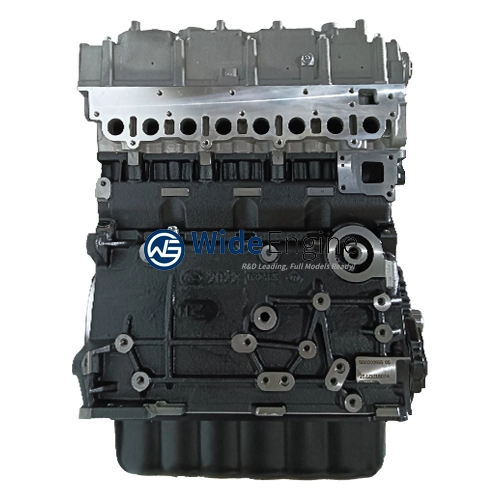
A long block is the main engine assembly. It normally includes the cylinder block and cylinder head, along with important internal components such as the crankshaft, pistons, connecting rods, camshaft, valves, and timing components. In simple terms, a long block provides the core structure of the engine, but it does not usually include many external accessories.
A long block is commonly used when the original engine has serious internal damage, but many external parts are still reusable. For example, if the turbocharger, alternator, starter motor, intake manifold, exhaust manifold, sensors, and wiring harness are still in good condition, a buyer may choose a long block and transfer these parts from the old engine.
This makes a long block a practical and cost-effective option for professional repair shops, engine rebuilders, auto parts distributors, and buyers who have the technical ability to complete the installation process.
What Parts Are Included in a Long Block?
The exact configuration can vary by supplier, but a long block usually includes the main internal engine components. Common included parts may include:
- Cylinder block
- Cylinder head
- Crankshaft
- Pistons
- Piston rings
- Connecting rods
- Camshaft
- Valves
- Timing chain or timing belt components
- Basic gaskets and seals, depending on the supplier
The main purpose of a long block is to replace the damaged core engine assembly. It is not designed to be a fully dressed or fully complete engine package. That is why buyers should always request a detailed parts list before placing an order.
For example, some suppliers may include the oil pump or water pump, while others may not. Some long blocks may come with more pre-assembled components, while others may require more installation work. Never assume that every long block includes the same parts.
What Parts Are Usually Not Included in a Long Block?
A long block normally does not include many external accessories or vehicle-specific components. These parts often need to be transferred from the original engine or purchased separately.
Common parts that are usually not included in a long block include:
- Turbocharger
- Fuel injectors
- Intake manifold
- Exhaust manifold
- Alternator
- Starter motor
- Sensors
- Wiring harness
- ECU
- Fuel pump
- Air conditioning compressor
- Engine mounts
- External pipes and hoses
- Some cooling system parts
This is why a long block is not usually considered a direct plug-and-play solution. It requires additional installation work and proper compatibility checking. If the existing accessories are damaged, missing, or not compatible, the buyer may need to spend more money on extra parts.
What Is a Complete Engine?
A complete engine is a more fully assembled engine unit. It usually includes the long block plus many external components and accessories. Compared with a long block, a complete engine is closer to a ready-to-install replacement solution.
Depending on the supplier and engine model, a complete engine may include the intake manifold, exhaust manifold, fuel injectors, turbocharger, starter motor, alternator, sensors, wiring harness, water pump, and other engine-mounted accessories.
A complete engine is often chosen when the old engine has suffered serious damage, when many external parts are missing, or when the buyer wants to reduce installation time. It is also a practical option for fleet operators and repair workshops that need to get vehicles back on the road quickly.
However, buyers should understand one important point: “complete engine” does not always mean every part is included. The meaning of “complete” can vary from one supplier to another. Before ordering, buyers should always confirm the exact configuration.
What Parts Are Usually Included in a Complete Engine?
A complete engine may include more components than a long block. Common included parts may include:
- Long block assembly
- Intake manifold
- Exhaust manifold
- Fuel injectors
- Turbocharger, if applicable
- Starter motor
- Alternator
- Water pump
- Sensors
- Wiring harness
- Fuel system components
- Engine-mounted accessories
- Flywheel or flexplate, depending on configuration
- Other external parts, depending on supplier
Because complete engines include more accessories, they usually cost more than long blocks. They are also heavier, more complex to pack, and more expensive to ship. However, the higher purchase price may be justified if it reduces labor time, avoids missing parts, and shortens vehicle downtime.
Long Block vs Complete Engine: Comparison Table
The table below shows the main differences between a long block and a complete engine.
| Comparison Point | Long Block | Complete Engine |
|---|---|---|
| Assembly Level | Core engine assembly | More fully assembled engine unit |
| Included Parts | Mainly internal engine parts | Long block plus many external accessories |
| External Accessories | Usually not included | Many are included, depending on supplier |
| Installation Work | More parts need to be transferred | Less transfer work required |
| Purchase Cost | Usually lower | Usually higher |
| Labor Time | Usually longer | Usually shorter |
| Shipping Weight | Lighter and easier to ship | Heavier and more expensive to ship |
| Compatibility Check | Reused parts must be checked carefully | Full engine configuration must be confirmed |
| Best For | Repair shops, rebuilders, bulk buyers | Fleet owners, urgent repairs, vehicle owners |
| Main Benefit | Lower cost and flexibility | Faster and easier installation |
This comparison shows that the best choice depends on more than the product price. Buyers should consider the condition of the existing engine accessories, installation ability, labor cost, downtime, and supplier support.
Advantages of Choosing a Long Block
Lower Purchase Cost
One of the biggest advantages of a long block is its lower purchase cost. Since it includes fewer external components than a complete engine, the product price is usually more affordable.
This is useful for buyers who want to control repair costs. If the original accessories are still in good condition, there may be no need to pay extra for a complete engine. Instead, the buyer can purchase a long block and reuse the existing parts.
For repair shops and engine rebuilders, this can also improve profit margins. They can inspect the old accessories, replace only the necessary parts, and provide a cost-effective repair solution to customers.
Reuse Existing Accessories
A long block allows buyers to reuse many original engine accessories. These may include the turbocharger, intake manifold, exhaust manifold, alternator, starter motor, sensors, fuel injectors, and wiring harness.
This is especially useful when those parts are still working properly. Reusing original accessories can reduce waste, lower parts costs, and keep the replacement process more economical.
However, reused parts should always be inspected carefully. Installing old damaged accessories on a new long block can cause performance problems, oil leaks, overheating, poor fuel injection, or even engine failure.
Easier International Shipping
Long blocks are usually easier to ship than complete engines because they include fewer external parts. They are generally more compact, lighter, and easier to pack securely.
For importers, wholesalers, and distributors, this can be an important advantage. Lower shipping weight and simpler packaging can reduce freight cost, customs complexity, and damage risk during transportation.
This is one reason why many B2B buyers prefer long blocks for bulk purchasing. They can import the main engine assembly and source or reuse accessories locally.
Ideal for Professional Repair Shops
Professional repair shops often prefer long blocks because they have the tools and technical knowledge to transfer parts from the old engine. Mechanics can inspect each accessory, clean or replace worn parts, and control the final installation quality.
A long block gives repair shops more flexibility. They can build the final engine configuration based on the actual condition of the vehicle, customer budget, and repair requirements.
For example, if the old alternator is good but the injectors are worn, the shop can reuse the alternator and replace the injectors separately. This flexibility can help create a more balanced repair solution.
More Flexible for Different Repair Needs
Long blocks are also flexible for different customer needs. A distributor may sell long blocks to repair shops, rebuilders, or customers who already have compatible accessories. A workshop may use long blocks for different repair cases where the external parts vary from vehicle to vehicle.
This flexibility is especially important for engine models used across multiple vehicle applications. Even engines with the same basic code may have differences in sensors, mounts, manifolds, emission systems, or accessory layout. A long block allows the installer to match the final configuration more carefully.
READ THE ARTICLE Advantages of Long blocks over Complete Engines TO LEARM MORE
Advantages of Choosing a Complete Engine
Faster Installation
The biggest advantage of a complete engine is faster installation. Since more components are already included, mechanics spend less time transferring parts from the old engine.
This can be very important for urgent repairs. If a commercial vehicle, work truck, delivery van, or fleet vehicle is out of service, every extra day of downtime can create business losses. A complete engine can help shorten the repair process and get the vehicle back to work faster.
Fewer Missing Parts
A complete engine reduces the risk of missing external components during installation. When more accessories are included, the workshop may not need to source as many additional parts.
This is helpful for buyers who do not have easy access to spare parts. It is also useful when the old engine is incomplete, badly damaged, or already removed from the vehicle.
However, buyers should still confirm what is included. A complete engine can reduce missing-part risks, but only if the supplier provides a clear and accurate configuration.
Better for Severe Engine Damage
If the old engine has suffered severe damage, a complete engine may be the better option. Serious engine failure may damage not only the internal parts but also the turbocharger, injectors, manifolds, sensors, wiring, and other accessories.
In this situation, buying only a long block may not solve the full problem. The buyer may still need to purchase many additional parts, which can increase the total repair cost and delay installation.
A complete engine provides a more practical solution when the old engine accessories are unreliable or unusable.
Reduced Labor Time
Because fewer parts need to be transferred, a complete engine can reduce labor time. This can lower installation complexity and help mechanics complete the repair more efficiently.
For repair workshops with heavy workloads, saving labor time can be valuable. For vehicle owners, it may also reduce labor charges, depending on the workshop’s pricing method.
Even though the complete engine costs more upfront, the total repair cost may be reasonable if it reduces labor and avoids extra parts purchases.
Convenient One-Package Solution
A complete engine is often the more convenient option for buyers who want a simpler replacement process. Instead of collecting many accessories separately, buyers can receive a more complete engine package from one supplier.
This is especially useful for individual vehicle owners, fleet maintenance teams, and workshops handling urgent repairs. It reduces sourcing work and makes the replacement process easier to manage.
Which Option Saves More Money?
Many buyers ask whether a long block or a complete engine is more cost-effective. The answer depends on the full repair situation, not just the purchase price.
Initial Purchase Price
A long block usually has a lower initial purchase price. If your existing accessories are still usable, a long block can be the more economical choice.
A complete engine usually costs more because it includes more components. However, the higher price may be reasonable if many accessories are needed.
Installation Labor Cost
A long block often requires more labor because the mechanic must transfer parts from the old engine. This includes removing, inspecting, cleaning, and reinstalling external components.
A complete engine may reduce labor time because more parts are already installed. If labor rates are high, this can make a complete engine more cost-effective in some cases.
Additional Parts Cost
If you buy a long block but later discover that the turbocharger, injectors, starter, alternator, or sensors are damaged, the total cost can increase quickly.
In this case, the complete engine may become the better value. It may cost more upfront, but it can reduce the need for separate accessory purchases.
Downtime Cost
Downtime is especially important for commercial vehicles and fleet operators. If a vehicle is used for delivery, construction, logistics, public transport, or field service, every day out of service may cause lost income.
A complete engine may help reduce downtime. For business buyers, shorter repair time can sometimes be more important than saving money on the initial product price.
Total Cost of Ownership
To choose the most cost-effective option, buyers should calculate the total cost, including:
- Engine purchase price
- Labor cost
- Extra parts cost
- Shipping cost
- Downtime cost
- Warranty risk
- Future maintenance risk
A long block is usually cheaper when old accessories are reusable. A complete engine may be more economical when many old parts are damaged or when fast installation is a priority.
When Should You Choose a Long Block?
A long block is a good choice when your main engine assembly is damaged, but the external parts are still usable. It is also suitable when you have professional installation support and want to reduce purchase cost.
You should choose a long block if:
- Your old turbocharger, injectors, manifolds, sensors, and accessories are still in good condition
- You want a lower purchase price
- You have a professional mechanic or repair shop
- You are buying engines for resale, repair, or bulk distribution
- You want flexibility in final engine configuration
- You can confirm compatibility of reused parts
- You want easier shipping for international orders
A long block is often a smart choice because it provides the essential engine assembly without unnecessary accessories. It is practical for repair networks, distributors, and workshops that already have access to external engine parts.
When Should You Choose a Complete Engine?
A complete engine is a better choice when the old engine is badly damaged, when accessories are missing, or when you want a faster replacement process. It is also useful when the vehicle must return to service quickly.
You should choose a complete engine if:
- The old engine accessories are damaged or unreliable
- Many external components are missing
- You need faster installation
- You want fewer parts to transfer
- You want a more ready-to-install solution
- You need to reduce vehicle downtime
- You do not want to source many accessories separately
- You are repairing fleet or commercial vehicles
A complete engine may be more convenient. It reduces the need for complex parts sourcing and may simplify the repair process.
Factors to Consider Before Buying
Vehicle Make and Engine Code
Before buying a long block or complete engine, always confirm the vehicle make, model, production year, engine code, displacement, fuel type, and emission standard.
Engine code is especially important. Two engines may look similar but have different sensors, mounting points, injection systems, or emission components. Buying the wrong engine can cause installation problems and additional costs.
Compatibility Verification
Compatibility should never be guessed. Buyers should provide the supplier with accurate vehicle information, engine code, photos of the old engine, and any available part numbers.
Important compatibility details may include:
- Engine code
- Vehicle model and year
- Transmission type
- Fuel type
- Emission standard
- Turbocharger configuration
- Sensor layout
- Mounting position
- Intake and exhaust design
Good suppliers should help buyers confirm compatibility before shipping.
Engine Condition
Buyers should clearly understand whether they are purchasing a brand-new engine, remanufactured engine, rebuilt engine, or used engine.
A brand-new engine is manufactured with new components and should meet strict quality standards. A remanufactured engine is restored to meet specific performance standards, but its condition depends on the remanufacturing process. A used engine may be cheaper, but it carries more uncertainty.
For long-term reliability, buyers should not only compare price. They should also consider quality control, testing, warranty, and supplier reputation.
Included Components List
One of the most important steps is confirming the included components list. This is especially important because long blocks and complete engines may vary between suppliers.
Before payment, ask for:
- A written parts list
- Real product photos
- Clear explanation of excluded parts
- Packing photos, if needed
- Installation notes, if available
This helps avoid misunderstandings and protects both the buyer and supplier.
Warranty Coverage
Warranty terms may differ depending on whether you buy a long block or complete engine. Buyers should confirm what the warranty covers and what may void the warranty.
For example, if old injectors, turbocharger, or cooling parts are reused on a new long block and cause damage, the warranty may not cover the failure. That is why proper installation and accessory inspection are important.
Ask the supplier:
- How long is the warranty?
- Which parts are covered?
- Are labor costs covered?
- What documents are needed for a claim?
- Does installation by an unqualified mechanic affect warranty?
- Are reused old accessories excluded from coverage?
Clear warranty terms reduce disputes and make the purchase safer.
Supplier Reputation
Choosing the right supplier is just as important as choosing the right engine type. A reliable supplier should offer stable product quality, accurate compatibility support, clear communication, safe packaging, and after-sales service.
For B2B buyers, supplier reliability directly affects customer satisfaction. Poor communication, unclear parts lists, weak packaging, or inconsistent quality can lead to delays, returns, and complaints.
When evaluating suppliers, consider:
- Experience with the engine model
- Product quality control
- Real product photos
- Export packaging ability
- Delivery time
- Technical support
- Warranty policy
- Customer feedback
Packaging and Shipping
Engines are heavy and valuable products, so packaging matters. Poor packaging can cause damage during transportation, especially for international shipping.
Long blocks are generally easier to pack and ship because they have fewer external parts. Complete engines require more careful protection because accessories, sensors, and wiring may be more exposed.
Buyers should confirm packaging method, wooden case protection, moisture protection, shipping documents, and delivery schedule before ordering.
Technical Support
Technical support is valuable, especially for buyers who are not engine specialists. A good supplier should help confirm compatibility, explain included parts, provide installation guidance when needed, and respond quickly to after-sales questions.
For repair shops and distributors, this support can save time and reduce customer complaints.
Conclusion
A long block and a complete engine are both important solutions for engine replacement, but they serve different buying needs. A long block is the core engine assembly and is usually more cost-effective, flexible, and easier to ship. It is a strong choice when the original external accessories are still usable and professional installation support is available.
A complete engine includes more components and offers a more convenient replacement solution. It is usually more expensive, but it can reduce installation time, lower the risk of missing parts, and help vehicles return to service faster.
The best choice depends on your budget, engine condition, existing accessories, installation ability, downtime requirements, and supplier configuration. Before ordering, always confirm the engine code, compatibility, included components, warranty terms, and real product photos.
If you are unsure which option is right for your vehicle or business, contact a reliable engine supplier with your engine model, vehicle information, and required configuration. A clear parts list and professional support can help you choose the right long block or complete engine for your replacement needs.



